Hawaii ocean guide · Oʻahu
Whale watching in Hawaii.
When to visit, what to watch for, and how to enjoy humpback season respectfully—from your first glimpse of a blow to that last tail disappearing beneath the surface.
Find your Waikiki whale watch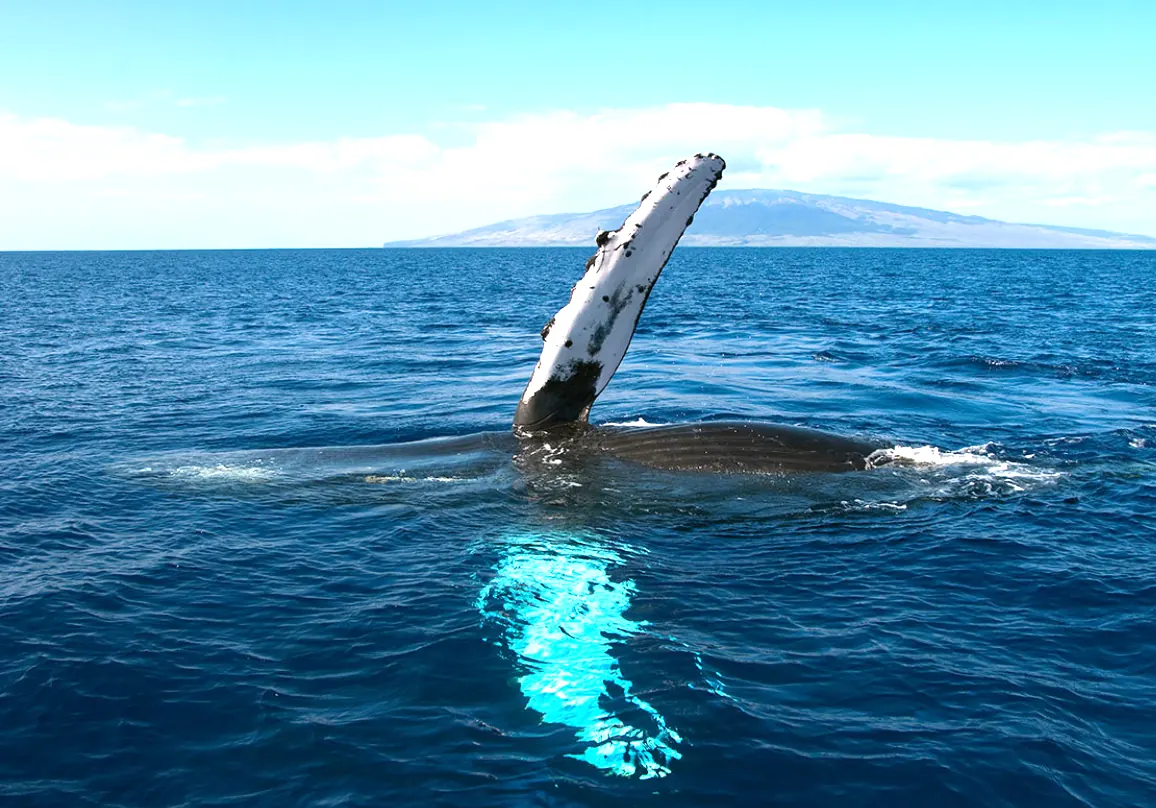
Start with the season
When is whale-watching season in Hawaii?
Hawaii’s humpback season generally runs from November through May, with the greatest abundance typically between January and March. Arrivals and departures vary: the whales follow their own rhythms.
Humpbacks return to Hawaiian waters as the season gets underway. Early-season sightings can be less consistent.
The broad peak in whale abundance makes these months a useful starting point when planning a dedicated whale-watching trip.
The season winds down as whales leave the islands. A natural-season sighting window does not mean every tour operator runs through May.
Seasonal guidance: NOAA Hawaiian Islands Humpback Whale National Marine Sanctuary.
For the upcoming season, book between December 15, 2026 and April 15, 2027. Available days vary by departure; check the booking calendar for your preferred date.
A remarkable journey
Why do humpback whales come to Hawaii?
The islands are an important winter breeding area. Humpbacks come here to mate, give birth and nurse their calves. Seeing a mother and calf can be especially memorable, but it is a possibility rather than a promised part of any cruise.
Many of these whales travel from North Pacific feeding grounds, including Alaska. The Alaska-to-Hawaii journey is roughly 3,000 miles. During feeding season they build energy reserves by eating small fish and krill; during their time in Hawaii they rely heavily on stored energy.
Humpbacks are known in Hawaiian as koholā. Their long pectoral fins, broad tails and surface activity make them fascinating to watch—even when the encounter is a quiet surfacing rather than a dramatic breach.
Learn more from NOAA’s sanctuary overview, NOAA Fisheries’ humpback profile and Hawaii’s Division of Aquatic Resources.
Choose the island you will enjoy
Where can you go whale watching?
Humpbacks visit waters around the main Hawaiian Islands. The shallow waters between Maui, Lānaʻi and Molokaʻi are particularly well known for concentrations of whales. Sightings are also common around Oʻahu, with other viewing areas off Kauaʻi and Hawaiʻi Island.
For visitors staying in Honolulu or Waikiki, an Oʻahu departure lets you make whale watching part of your trip without arranging an interisland flight. E Sea Diver leaves Kewalo Basin Harbor to look for whales in Māmala Bay, along Honolulu’s south shore.
When comparing tours, consider the harbor location, travel time, boat layout, trip length and pickup options. Those practical details often matter more to your day than a dramatic promotional photograph.
Island overview: Hawaii Division of State Parks.
Keep your eyes on the water
What might you see?
A visible puff above the ocean may be your first clue. Watch the surrounding water for the whale’s back and dorsal fin.
A whale may lift its tail as it dives. The markings on humpback flukes can help researchers identify individual animals.
Humpbacks sometimes leap partly out of the water or slap the surface with a tail or pectoral fin. These moments are exciting and unpredictable.
Behavior and identification: NOAA Fisheries.
Scan a wide area, listen when the crew points something out, and spend some time watching without your camera. A cruise may include long stretches of searching. No operator can promise a breach, a calf, or a whale appearing beside the boat.
Give whales room
Responsible viewing is part of the experience.
In Hawaii, approaching a humpback whale within 100 yards is prohibited. This applies to people in the water and to boats and other watercraft. A respectful whale watch observes from a distance and allows the animals to continue their natural activities.
Follow the captain’s instructions, use binoculars or a camera’s zoom, and never try to touch, feed or swim with whales. If a whale approaches unexpectedly, let the crew manage the situation; an animal’s approach is not an invitation to interact.
Viewing rules and guidance: NOAA sanctuary regulations and responsible recreation guidance.
From Kewalo Basin, near Waikiki
Choose your E Sea Diver whale watch.
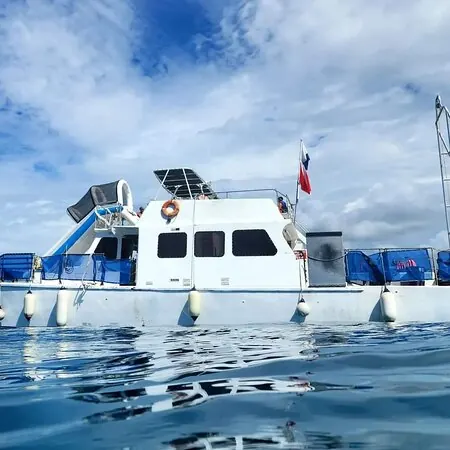
Board Ocean Intrigue, our 65-foot double-decker power catamaran, for time on the ocean with room to look around, two onboard restrooms, water and granola bars. Each group receives a pair of binoculars. These are sightseeing cruises: there is no swimming or snorkeling stop.
| Departure | Time aboard | Ticket prices | Waikiki pickup |
|---|---|---|---|
| 8:00 AM | 90 minutes | Ages 4+: $29 Ages 0–3: free | Not available |
| 10:00 AM | 90 minutes | Ages 13+: $39 Ages 4–12: $29 Ages 0–3: free | $10 per person, round trip |
| 4:30 PM sunset | 2 hours Returns 6:30 PM | Ages 13+: $52 Ages 4–12: $29 Ages 0–3: free | $10 per person, round trip |
Base fares shown; applicable taxes and fees are displayed when booking. Check the live calendar for available dates. Times are Hawaii time.
The 8:00 AM departure is the lowest-priced option and requires your own transportation. The 10:00 AM trip offers a later start and optional Waikiki pickup. The two-hour sunset trip gives you more time aboard and allows family-friendly BYOB, with no glass containers. No departure time guarantees more whale activity.
Before you board
A little planning makes the day easier.
- Bring sun protection, sunglasses, a light layer and a secure camera or phone.
- Allow time for driving, parking and check-in. Morning check-in is 30 minutes before departure; sunset check-in is by 4:00 PM.
- Meet at the orange and green booth at Slip F-18, Pier E Gate, Kewalo Basin, 1025 Ala Moana Boulevard, Honolulu, Hawaii 96814.
- Arrange the $10 round-trip Waikiki pickup at least 24 hours ahead. Same-day requests are not accepted. Pickup is unavailable for the 8:00 AM trip.
Harbor parking is operated by a third party and is not included. It was $4 per hour as of September 2026; rates may change. Follow the lot signs to pay by QR code.
Questions before you book
Whale-watching FAQs
Are whale sightings guaranteed?
No. Whales are wild animals, and sightings are never guaranteed. The crew searches with you, but behavior, visibility and the animals’ location vary.
What if we don’t see a whale?
If you do not see whales on your first E Sea Diver trip, you can reschedule within two weeks and within the same whale season for one more trip at $7 per person plus taxes and card fees. If the second trip also has no sighting, a third trip requires a new ticket.
Can children and infants join?
Yes. There is no minimum age to board, and ages 0–3 ride free. Strollers are welcome. Include every member of your party when booking.
Do I need to know how to swim?
No. Guests remain aboard for the whale-watching cruise. There is no swimming or snorkeling, and emergency life jackets are available for everyone.
Can guests who use wheelchairs board?
Call (808) 673-0969 before booking to arrange earlier boarding and assistance. Powered wheelchairs and powered strollers are not permitted aboard. The Waikiki shuttle has no wheelchair lift, so guests needing accessible transportation must arrange their own trip to the harbor.
Can we bring food or alcohol?
Food, snacks and nonalcoholic drinks are welcome. Alcohol is permitted only on the sunset whale-watching trip, on a BYOB basis; drinks are not sold aboard. Keep it family-friendly and leave glass containers at home.
Is there a best time of day to see whales?
There is no guaranteed best departure. Choose a time that suits your plans, transportation needs and preferred trip length. A morning or sunset booking cannot promise a particular sighting or behavior.
Can we go whale watching in summer?
Summer falls outside Hawaii’s usual humpback season, and E Sea Diver does not operate its seasonal whale trips then. Our turtle-snorkeling adventures and Friday fireworks cruises offer other ways to enjoy the ocean.
Your winter day on the water
Come look for humpbacks with us.
Choose a morning or sunset cruise from Kewalo Basin and leave room in your plans for a little wonder. Season: December 15–April 15.